If you run a local business — a clinic, a salon, a restaurant, a boutique, or a service shop — you may wonder whether a website is really worth the investment when customers already find you through word of mouth or Google Maps. The short answer: yes, and increasingly so. A website is no longer a “nice to have” for local businesses; it’s the digital front door that determines whether a potential customer trusts you, chooses you, or scrolls past you to a competitor.
Here’s why a professional website matters so much for local businesses, and what it actually does for your bottom line.

1. It’s Often the First Impression You Make
Before a customer walks into your store or calls your clinic, they usually search for you online first. Whether they find you through Google Search, Instagram, or a friend’s recommendation, the very next step is almost always the same: they check your website. A clean, modern, mobile-friendly site signals that you’re a legitimate, established business. An outdated site — or no site at all — raises doubt, even if your actual service is excellent.
In this sense, your website works like a 24/7 storefront. It’s open even when you’re closed, and it’s often the deciding factor in whether someone chooses to contact you.
2. It Builds Trust and Credibility
Local customers are cautious, especially for services like healthcare, home repair, or anything involving an upfront payment. A well-designed website with clear information — your services, pricing, team, certifications, and genuine customer reviews — builds the trust needed to convert a curious visitor into a paying customer. Without a website, you’re relying entirely on reviews on third-party platforms, which you don’t control and can’t fully showcase.
3. It Puts You on Google Maps and Local Search
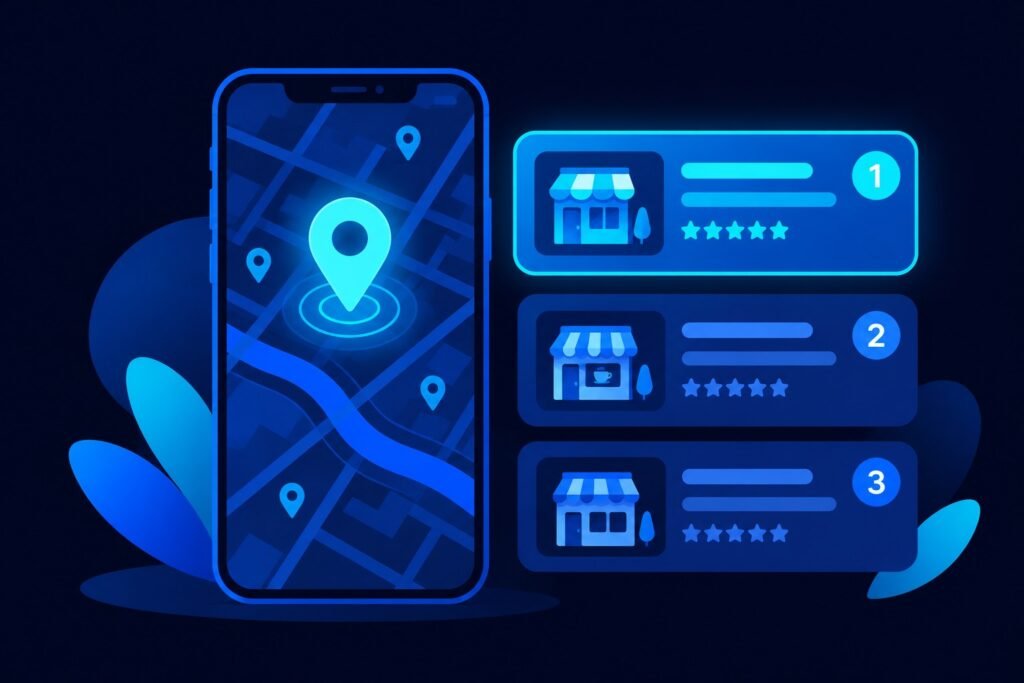
A website tied to a Google Business Profile dramatically improves your visibility in local search results — the map pack that shows up when someone searches “dentist near me” or “best salon in [your area].” Businesses without a website often rank lower, because Google uses your site’s content, structure, and keywords as strong ranking signals for local SEO. If you want to show up when nearby customers are actively looking for what you offer, a website isn’t optional — it’s foundational. For a deeper look at ranking locally, see our practical SEO guide for small businesses in India.
4. It Works for You Around the Clock
Unlike a physical location with fixed hours, your website never closes. Customers can browse your services, check your pricing, read testimonials, book an appointment, or send an enquiry at 11 p.m. on a Sunday. This convenience matters — many people prefer to research and even book online rather than call during business hours. A website captures that demand instead of losing it to a competitor who’s easier to reach online.
5. It Gives You Control Over Your Brand
Relying only on social media pages or listing directories means your business’s online presence is controlled by someone else’s platform, algorithm, and rules. A website is the one digital asset you fully own. You decide how your brand looks, what story you tell, and how customers experience your business — without an algorithm deciding who sees it.
6. It’s More Cost-Effective Than Traditional Advertising
Compared to print ads, hoardings, or radio spots, a website (paired with basic local SEO) delivers a far better return over time. Once built and optimized, it keeps generating enquiries and bookings with minimal ongoing cost — something traditional advertising simply can’t do.
7. It Helps You Compete With Bigger Businesses
A well-built website levels the playing field. A small clinic or boutique with a professional, fast, SEO-friendly website can outrank and outshine a larger competitor that has neglected its online presence. For local businesses, this is one of the most affordable ways to compete on visibility and trust, not just budget.
8. It Makes It Easier for Customers to Take Action
A good website isn’t just informational — it’s built to convert. Clear calls-to-action like “Book Now,” “Call Us,” or “Get a Free Quote,” along with a simple enquiry form, remove friction between a customer’s interest and an actual booking. Every extra step a customer has to take (like searching for your phone number separately) is a chance to lose them. Running a clinic? See where the website fits in a patient’s decision in our post on how patients choose a clinic in Bangalore.
The Bottom Line
For local businesses, a website isn’t just about looking professional — it directly affects whether new customers find you, trust you, and choose you over the competition. In a market where most buying decisions start with an online search, not having a website (or having a poor one) means losing customers before they even know your business exists.
If your business doesn’t have a website yet, or your current one feels outdated and isn’t bringing in enquiries, it’s worth treating it as a priority investment rather than an afterthought. A well-designed, locally optimized website pays for itself many times over by turning searches into customers. Wondering how customers actually find you? Read Your Next Customer Is Googling You Right Now. Are You Showing Up?
Frequently Asked Questions
Do small local businesses really need a website in 2026?
Yes. Even businesses that rely on word of mouth or walk-ins benefit from a website, since most customers check online before visiting or calling — it’s often the first thing that builds or breaks trust.
Is a Google Business Profile enough instead of a website?
A Google Business Profile helps you show up in local search, but a website gives you full control over your brand, more space to showcase services and reviews, and a stronger signal for local SEO rankings.
How much does a website cost for a local business?
Costs vary widely depending on design complexity and features, but a basic, professional, mobile-friendly site is far more affordable — and delivers better long-term ROI — than most traditional advertising.
How quickly can a website help my business get more customers?
Many businesses start seeing enquiries within weeks of launch, especially when the site is paired with basic local SEO and a complete Google Business Profile — see our SEO guide for practical next steps.